On a Saturday morning, Jeff sends me a selfie: his hair wild, sticking up in tufts, his undershirt creased, glasses askew, and that lopsided grin splitting his face. He wishes me a good morning, and I can’t help but laugh, still not entirely sure what to do with these candid glimpses, but I’m learning to see them as a kind of unmasking—his way of letting me in. He looks so unguarded I almost want to reach through the phone and smooth his hair myself.
I snap a picture of my bedhead, curls sticking up like compass needles, and text it to him with a caption about my hair going in the Ordinal directions: NE, NW, due up.
Jeff immediately replies, “Holy hair.” His delight is genuine, and I can almost hear the laugh in his words. He tells me my hair is poofy, his is spiky, that we’re basically a science experiment in static electricity.
He’s spending his morning listening to piano music and checking on his plants. Then he sends a photo of a pothos root, dark and gelatinous. “Should I transfer them to new pots with better drainage?” he asks.
When he asks if his ceramic planters also need better drainage, I stare at the image of the dark rot blooming up the center. “Their roots are drowning,” I type back, with a certainty that doesn’t feel entirely my own.
For a second, the words catch in my throat, wondering if I’m talking about myself. A sudden pressure builds in my chest, heavy and waterlogged, the familiar feeling of being unable to draw a full breath. It’s as if the more I try to fix the surrounding mess, the more my own roots threaten to suffocate in soil that won’t drain.
I shake the feeling off, tell myself not to spiral. There’s dessert to look forward to tonight—a new place for ice cream, the two of us together after I finish purging more junk from my house. I mention my progress, and Jeff launches into an eager tangent about organization, how much he loves it, how it’s the gift that keeps on giving. “Especially when it’s the way you want it.”
I know he means well, but I hear the echo of my impossible standards in his words. No chaos, no conflict; everything under control. I want that too. I want easy, untangled, peaceful. Yet even as I type my reply, I hear a voice in my head, the old but familiar warning—nothing ever stays perfect, and nothing good ever comes without cost, not when you have to keep control so tightly just to feel safe.
By the time I finally drag myself through the last hour of work, dessert is the only thing keeping me upright. Ice cream—always my weakness—and tonight, it’s the funnel cake sundae at the new place Jeff recommends. We meet at the plaza, sun slanting low as the day’s heat bleeds into an evening chill, and eat poke bowls first before the rewards of dessert.
Afterward, we share the sundae, two spoons digging in, hot dough and cold cream melting together, the powdered sugar dusting our lips while talking about summer plans. Perhaps another day trip to a state park or another outdoor activity. “Anything you’re tempted by?” he asks, eyes glinting. The word “tempt” lands oddly, heavy with an undercurrent, and I pretend not to notice.
I float the idea of kayaking—the quiet dip of a paddle, the feeling of drifting. He laughs, not unkindly. “Too slow. I need movement, or else I get bored. Like running, mountain biking. Fast over slow.” I try to explain how kayaking can be both, that you can chase the current or just let it hold you, but the distinction seems lost on him. With us, it’s always a negotiation.
He stares at his spoon for a beat, admitting he owns a kayak, but it’s some ocean-ready beast with a rudder. He bought it during a last-ditch effort to save his marriage, thinking maybe a family vacation home on the Carolina barrier islands would fix things. “Melissa always wanted that,” he explains. But the logistics, the money, the arguing—it all spiraled. The kayak he kept, just collecting dust in the garage.
The logic makes me tilt my head. Why not buy something for a lake here instead? It’s a little like Jeff himself: a man built for one environment, stuck in another, making do and never quite committing.
After the ice cream, we wander to a park nearby, the kind with a baseball diamond and metal bleachers. He offers me a piggyback ride, which is so ridiculous I have to say yes. I’m barely five feet tall, and my legs can’t wrap around his middle, so I cling to his neck like a child.
“It feels like you’re slipping off,” he chuckles, turning his face to brush my cheek.
“I can’t secure myself around you,” I gasp, struggling to hang on.
He pauses, the playful energy gone. “What’s that supposed to mean?” he asks, his voice low. “Are you saying I’m fat?”
“No,” I say, softer now. “My legs are just short.”
He pretends to sulk, but his hand finds my thigh and gives it a squeeze. “Let’s not focus on my flaws. It’s making me feel inadequate. Let’s focus on yours instead.” He grins, but the words have an edge. I recognize the move — the swift, blinding pivot of the spotlight back onto me anytime I get too close to something real.
We end up on the bleachers, and as the night air pricks my skin, Jeff drapes his jacket over me. He’s more physical tonight, or maybe I’m just noticing it more. His hands find my waist, tucking me against his chest, an unconscious claim, before he pulls me into his lap.
This show of affection should flatter me. Instead, my body tenses. He kisses me, softly at first, then deeper with an urgency that makes my pulse pound in my ears. I feel him, hard through his jeans, pressing against me like a question I don’t know how to answer. His hands travel, squeezing, gripping with a need that feels less like desire and more like hunger.
He nuzzles my neck, beard scraping my skin. “Oh, Lena,” he breathes.
I flinch. The knot in my gut pulls tight. “Jeff, there are kids playing just over there.”
He doesn’t let go. “Nobody cares. Nobody’s watching.”
But I do. I care. And the heat of his body, the insistence of his hands, feels suddenly invasive. “We can’t,” I remind him, reaching for the framework he’s given me, the boundary he claims to honor. “This could lead to trouble. To temptations.”
He pauses, just long enough for me to feel the heat of his frustration, before he nods and loosens his grip. “You’re right,” he agrees, releasing me with a heavy sigh. “I guess someone has to be the responsible adult.” But I see the flicker in his eyes—a flash of something like disappointment or calculation. I can’t tell which one.
Then a sudden light cuts across the dusk. A fire lantern drifts overhead, its paper skin glowing orange as it rises above the trees. The kids chase after it, laughing, their voices echoing. We both watch as it floats, a fragile glow against the deepening blue.
I feel my shoulders drop as it rises. The sight of the lantern—weightless, drifting away—unties some of the tension in my chest, like maybe I could learn to do the same. Just watch it go, no need to chase.
We walk a little more, just talking, following the lantern’s course until it disappears. Jeff wants to linger, not wanting the night to end, so we sit in his car, the windows cracked, darkness pooling around us. He tells me about his upcoming trip to Zion — hiking, Jeep tours, Canyoneering. He lists every detail of his itinerary, voice animated with anticipation. I nod along, genuinely happy for him, but also envious of his ability to choose adventure and have it work out.
I recap my own Zion bucket-list—the cool water of the Narrows, the wild quiet of being alone beneath a sky with no ceiling. My time, my pace, my choice. Yet my current plans feel brittle in comparison: a for-sale sign waiting for the lawn, a family truce stretched thin as glass, a summer of just holding my breath.
The parking lot empties around us. The stores are closing, the streetlights humming on. Jeff leans against his seat, arms folded, and looks at me with a heavy expression I can’t decipher. “Come here,” he murmurs. “I want to hold you for a while.”
I hesitate, but then shift across the console, letting him pull me onto his lap again. He pulls me in tight, my head resting on his chest. It’s the kind of hug that says everything and nothing at once. I let myself be held, just for a moment, and then he kisses me again, slower this time, as if trying to erase the awkwardness from before.
The kissing becomes more intimate, his hands moving, his body responding. When he admits he’s getting aroused, I stiffen. “We probably shouldn’t…” I trail off, embarrassed by my prudishness, but also frustrated that the responsibility always falls on me to stop things before they go any further.
He laughs, not unkindly. “You’re safe. I promised I wouldn’t let things go too far.”
And yet, every boundary I set feels like a dare. He makes our abstinence seem noble, but only because I’m the one enforcing it. It’s as if the sin isn’t in starting the game, only in finishing it—and my body is the field he can play on as long as I’m the one to call time.
On the drive home, I replay every moment, analyzing the red flags and the flashes of genuine connection that make it so hard to disentangle the two. The lantern burning out before it lands. The way desire can be both a rescue and a trap, how even hope can get heavy if you carry it too long.
I want to trust him, but I also want to trust myself, and I’m not sure which voice wins out. Still, the ache in my stomach tells me I already know the answer.
**
Over the next month, our morning texts become a ritual: always the first glow on my phone, always a little burst of light before I’m even truly awake. Sometimes it’s a simple “good morning and thinking of you.” Sometimes it’s a meme so ridiculous I snort my coffee. Either way, my face softens before my mind catches up.
One morning, after his reading time, Jeff writes, “Still and silent, yet growing.”
I stare at the words long enough for my screen to dim before typing back, “I love that for you.”
I tell him about Mel Robbins and he counters with “Atomic Habits.” We trade podcasts and principles, patching up our histories with borrowed wisdom. His messages are full of small, easy wins; mine are about the grit it takes to show up at all. It’s comforting to think we’re pursuing the same thing, but the question echoes in my mind: are we running toward something better together, or just alongside each other on parallel tracks that never touch?
One evening, Jeff sends a Bible verse: “Be still and know that I am God.” Psalm 46:10. He adds, “Imagine if we really lived like that? Stillness is what I’m aspiring to. Wish I could hold you.”
I read it three times. Stillness. From the man who texts me every morning without fail, who fills silence with words, who creates motion wherever he goes. The irony catches in my throat.
Yet the “wish I could hold you” is a bruise I keep pressing. I hold the phone with both hands, then write, “I’m holding you in my thoughts right now. Enjoy the peace in the stillness.” And as my thumb hovers over the screen, a thought appears. I ask for his email, and he gives it instantly.
Then I scroll through my documents, find the rough draft I’ve been picking at for weeks, four parts, the last one gaping open like a wound and I attach it. Three finished sections. One gap. I hover over send for a full minute, my finger trembling slightly, then press it. The whooshing sound feels like a door swinging open that I can’t close.
The next day, his reply comes: “Just read your email. I appreciate and respect your depth and your ability to articulate it. Thank you for sharing. Maybe one day we can sit down and truly unpack it, asking some challenging questions to further your self-knowledge. I wish I could hug you now.”
That’s the entire response. I reread it three times, waiting for something more. A line that touched him, the insight that moved him, the vulnerability I laid bare. For a moment, my chest tightens with disappointment.
Jeff appreciates my depth, but he doesn’t say what he found in it. He respects my articulation, but he doesn’t quote a single line back to me. He wants to unpack it one day, which means not now. Then he wants to hug me, which he always wants, like it’s a consolation prize.
I set the phone down. Pick it up. Read it again. Maybe he didn’t really read it, I think. Maybe he skimmed, saw it was personal, hit the right words — appreciate, respect, articulate — and moved on.
Or I’m just being paranoid. He said he wants to ask challenging questions. He said he wants to hug me for being vulnerable—the very thing he claims to value. By his own logic, I should feel seen. So why don’t I?
A small part of me recoils, wondering if I offered something meaningful only to have it met with polite, distant gratitude. I picture my words evaporating in his inbox, barely leaving a mark.
I pick up my phone, type, “Thank you for reading,” and delete it. Type “Did you have any thoughts on the fourth part?” Delete that too. Finally, I send a pink heart and a “thank you.” An acknowledgment to four parts of my soul, three raw, one still drowning in its rot.
I set my phone down, sit in the stillness Jeff claims to want, and look out the window at the tree branches clawing at the sky. Have I been brave or foolish for wanting something more? And if sharing my story was an act of hope, or just the sound of an old wound splitting open in the light.
This post is part of a fictionalized memoir. The emotional experiences and themes are drawn from my life, but all names, identities, timelines, and circumstances have been altered, obscured, or combined to protect privacy — including my own. These writings are not meant to diagnose, label, or describe any real person. Instead, they illuminate relational patterns that can occur in emotionally imbalanced or narcissistic dynamics. Any resemblance to actual individuals is coincidental or intentionally obscured. The intention is healing and awareness, not identification. These posts are for storytelling purposes only and do not constitute professional advice.
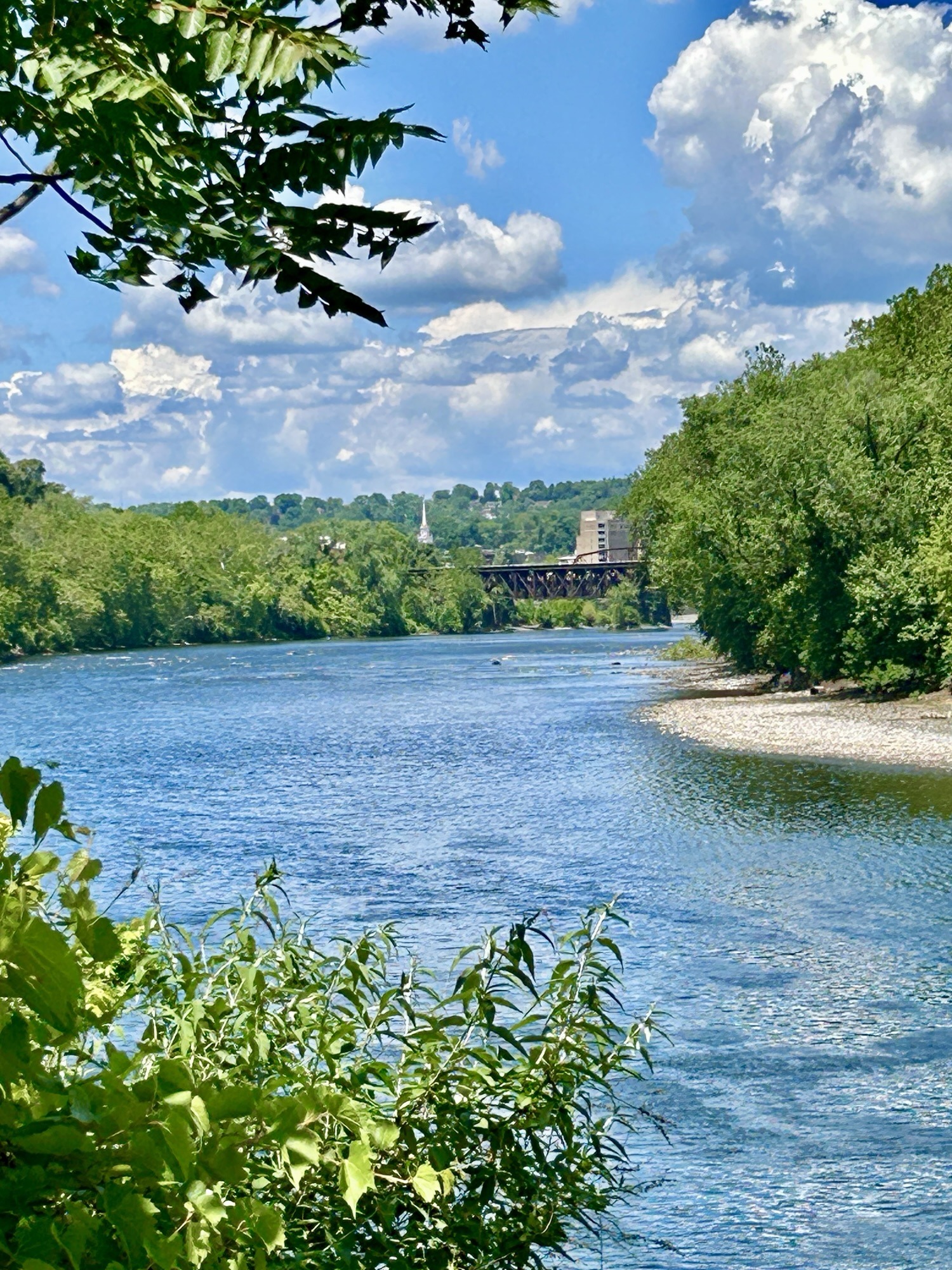
The images woven through My Journey and The Lessons are my own photographs — moments I captured on trails, in forests, beside rivers, and under open sky. They are pieces of my story and are not to be copied or used without permission.


Leave a Reply